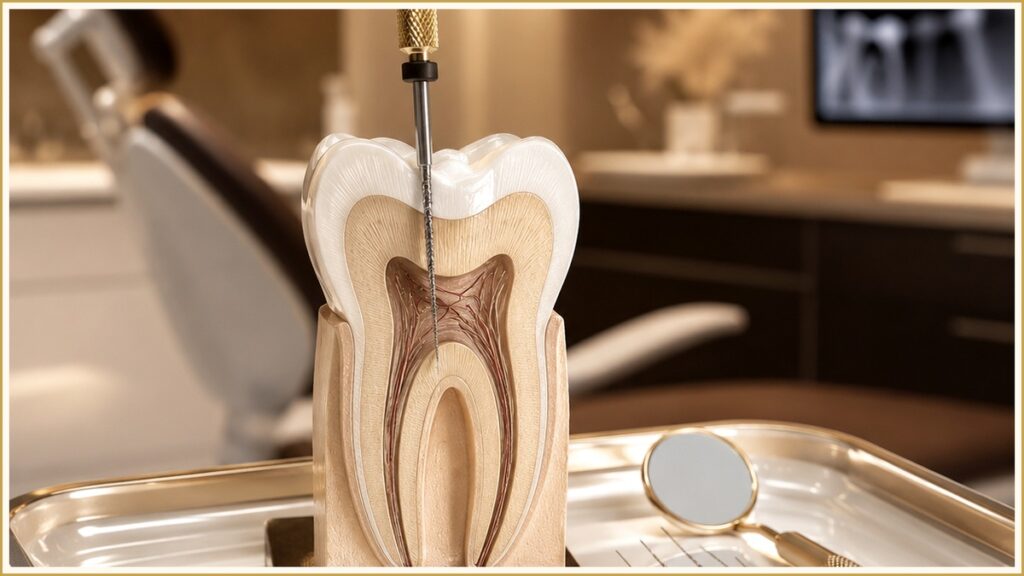
Losing a tooth can affect more than appearance. It may influence chewing, speech, comfort, and the way neighbouring teeth function. Dental implants are artificial replacements for missing tooth roots and can support crowns, bridges, or dentures.
Implant treatment must be carefully planned. A detailed examination is required to determine whether it is suitable for a particular patient.
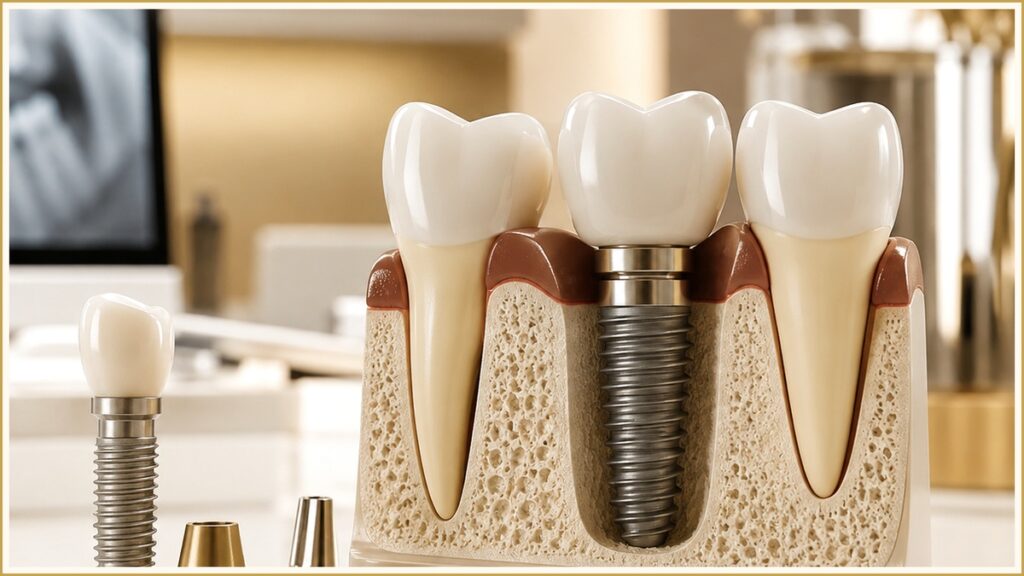
A dental implant is generally a small screw-shaped component placed into the jawbone. After the surrounding bone has healed around it, a connector and replacement tooth can be attached. The visible restoration is designed to resemble a natural tooth in shape and colour.
Suitability depends on gum health, available jawbone, oral-hygiene habits, general health, smoking, and the position of nearby teeth and anatomical structures. The assessment may include X-rays or scans and a review of the patient’s dental and medical history.
Some patients may require additional treatment, such as gum care, extraction, or bone grafting, before implant placement.
An implant cannot develop tooth decay, but the surrounding gums and bone still require excellent care. Brush carefully, clean between the teeth or around the implant as instructed, and attend regular dental reviews and professional cleaning appointments.
Smoking, poor plaque control, and untreated gum disease can increase the risk of problems around implants.
No. Bridges and removable dentures may also be appropriate for replacing missing teeth. Each option has different advantages, limitations, maintenance needs, and costs. A consultation allows the dentist to explain the available choices and recommend a personalised plan.
For a personalised dental implant assessment, contact Dr. Fahmida Akter at Dental Square.
Call / WhatsApp: 01683305821
Consultation Hours: Saturday–Thursday, 5:00 PM–9:00 PM
Clinic: Dental Square, 49 Modhumita Road, Ward 56, Tongi, Gazipur City
This article is intended for general information and does not replace individual diagnosis, treatment planning, or informed consent.